Straightening your teeth is no longer limited to one familiar option: traditional metal braces. Today, clear aligners offer a more discreet approach to correcting many alignment concerns, giving patients another way to work toward a straighter smile without brackets and wires. But that does not automatically make clear aligners better for everyone. The right choice depends on your teeth, bite, treatment goals, lifestyle, and how consistently you can follow the treatment plan. So, when it comes to braces vs. clear aligners, which option is actually better? The answer is less about choosing the more modern-looking treatment and more about choosing the treatment that is appropriate for your particular orthodontic needs.
Braces vs. Clear Aligners: What’s the Difference?
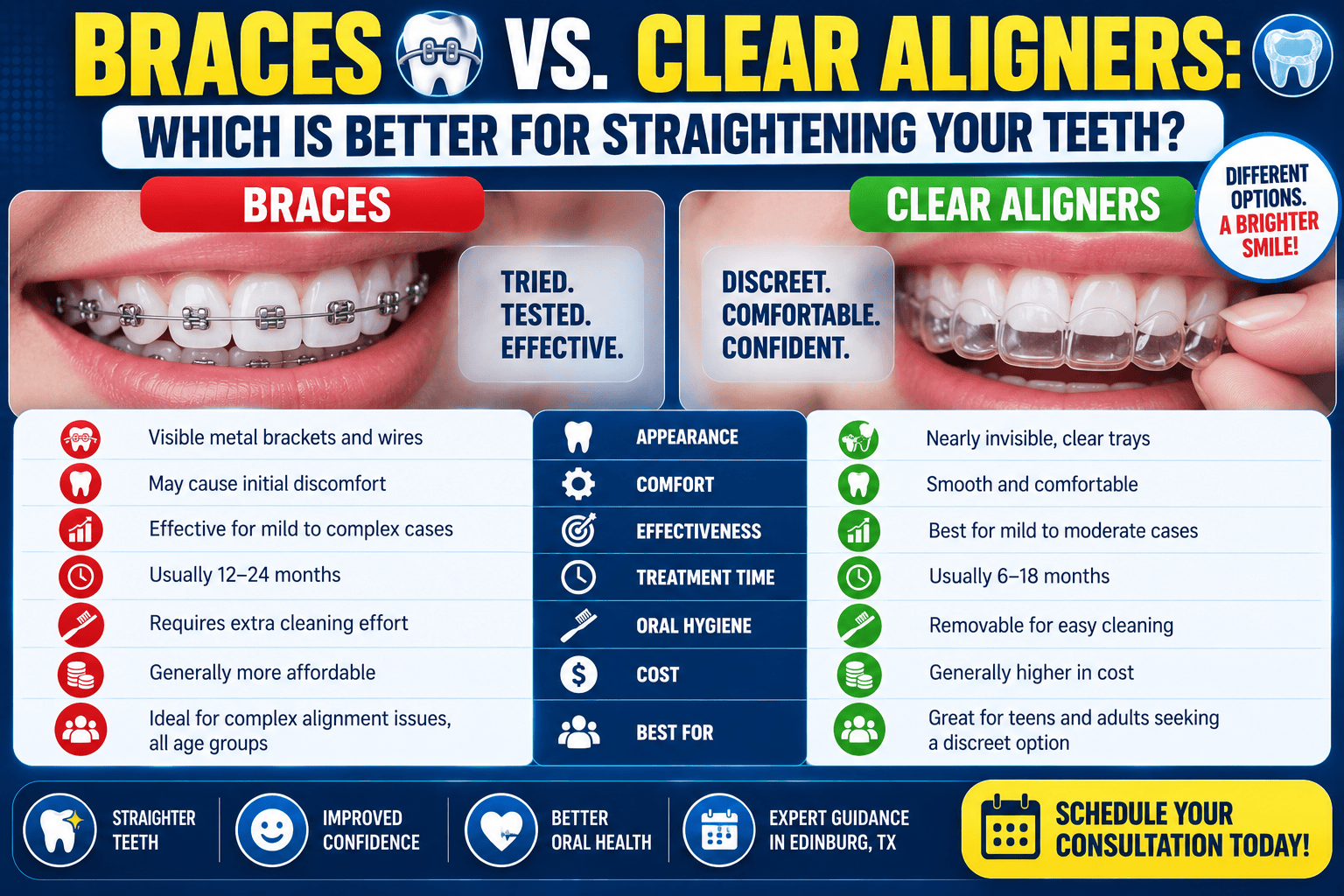
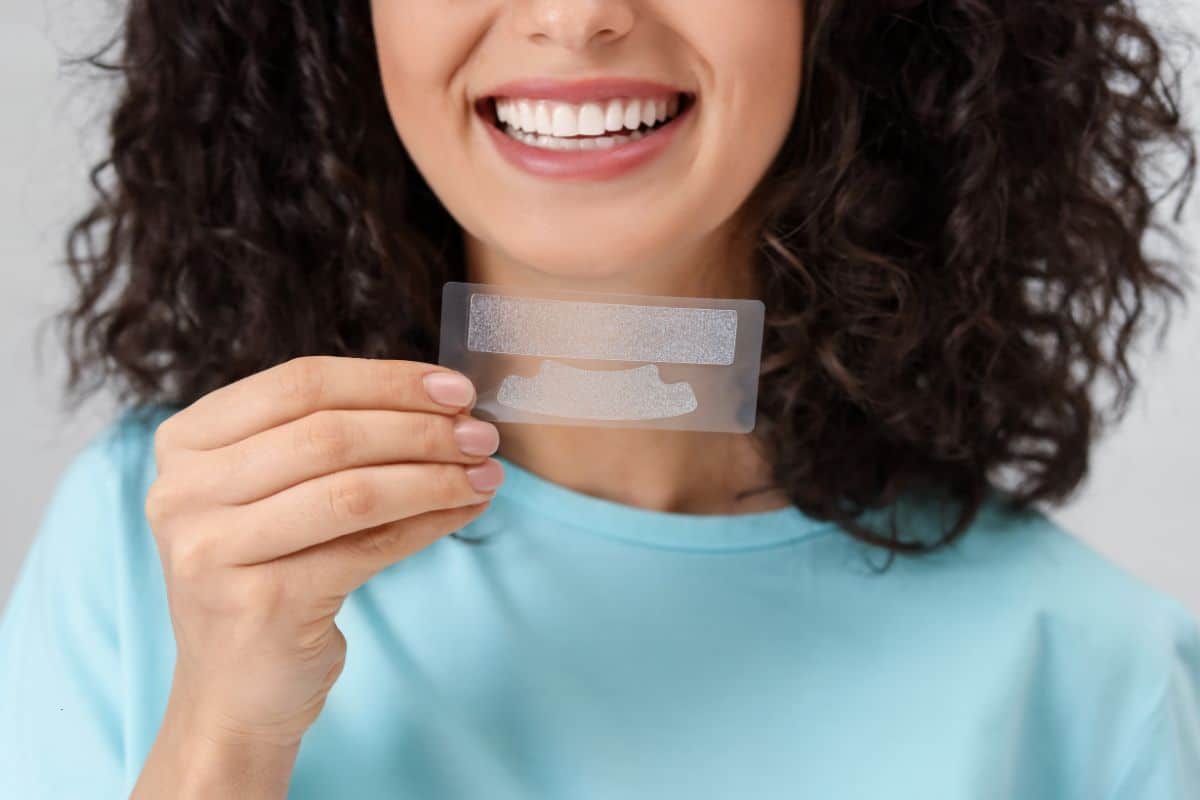
Traditional braces use brackets attached to the teeth and connected by wires. The system applies controlled pressure to gradually move teeth into improved positions. Clear aligners work differently. Instead of brackets and wires, they use a series of custom-made, transparent trays that gradually guide teeth toward their planned positions.
Ethos Modern Dental’s clear aligner treatment uses custom transparent trays created from digital scans. The aligners are removable and designed to gradually move teeth into alignment while offering a more discreet alternative to traditional braces. Both approaches are based on the same fundamental principle: applying controlled forces to move teeth over time. The difference is in how that movement is delivered and how the treatment fits into your daily life.
How Do Traditional Braces Work?
Traditional braces use a system of brackets and wires to gradually guide teeth into alignment. Because the appliances remain attached to the teeth throughout treatment, patients do not have to remember to put them back in after eating or brushing. This can be an advantage for people who may struggle to follow a removable treatment schedule. Braces have also been used for decades and remain an important orthodontic option for many patients, particularly when more significant alignment or bite correction is required. However, they are more visible than clear aligners and can make brushing, flossing, and eating certain foods more complicated during treatment.
How Do Clear Aligners Work?
Clear aligners use a sequence of custom-made trays.
Each set is designed to apply controlled pressure to specific teeth. As you progress through the series, the trays gradually guide your teeth toward the planned alignment. Ethos states that its aligners are produced from digital scans, with each set generally worn for 1–2 weeks. The treatment process includes consultation and scanning, customized planning, aligner fabrication, regular wear, progress checks, and retainers after completion. The trays can be removed for eating, drinking, brushing, and flossing. That removability is one of the biggest differences between aligners and traditional braces.
Braces vs. Clear Aligners: 8 Key Differences
1. Appearance
If discretion is your priority, clear aligners have an obvious advantage. Traditional braces are visible because the brackets and wires sit directly on the teeth. Clear aligners, by contrast, are designed to be much less noticeable. This can be particularly appealing to adults who work in professional environments or simply do not want orthodontic treatment to become a prominent part of their appearance. For teenagers and adults who want a more discreet option, clear aligners can make the treatment process feel less visually intrusive.
Winner for appearance: Clear aligners
2. Removability
This is one of the clearest differences between the two options. Braces remain attached to your teeth throughout treatment. Clear aligners can be removed when you eat, drink, brush, floss, or attend certain occasions. That flexibility can make everyday routines easier. However, removability also creates a responsibility: you have to wear the aligners consistently. If you frequently leave them out for extended periods, treatment may not progress as planned.
Winner for flexibility: Clear aligners
3. Eating and Drinking
With traditional braces, certain foods may need to be avoided because hard, sticky, or chewy foods can damage brackets or wires. Clear aligners are removed before eating, so there are fewer food restrictions during the day. You simply remove the trays, eat, clean your teeth, and put the aligners back in. However, you should follow your dentist’s instructions regarding what can be consumed while wearing the trays.
Winner for eating flexibility: Clear aligners
4. Oral Hygiene
Keeping teeth clean during orthodontic treatment is important regardless of which option you choose. Braces can make brushing and flossing more challenging because food particles and plaque can accumulate around brackets and wires. Clear aligners can be removed, allowing you to brush and floss your teeth normally before putting the trays back in. Ethos highlights the ability to remove clear aligners for normal brushing and flossing as one of their practical advantages. That does not mean aligners eliminate the need for good oral hygiene. Your teeth and the aligners still need regular cleaning.
Winner for everyday oral hygiene: Clear aligners
5. Comfort
Both treatments can cause some discomfort because teeth are being moved. With braces, brackets and wires may sometimes irritate the cheeks, lips, or tongue, particularly shortly after placement or adjustments. Clear aligners are made from smooth material and generally avoid the brackets and wires associated with traditional braces. You may still experience pressure or mild soreness when moving to a new aligner because the trays are applying force to the teeth. Ethos describes its clear aligners as smooth and without wires or brackets, although tooth movement can still produce pressure during treatment.
Winner for discreet comfort: Clear aligners
6. Treatment Discipline
This is where traditional braces can have an important advantage. Braces are fixed to your teeth, so you cannot accidentally forget to wear them. Clear aligners depend heavily on patient compliance. If you remove the trays too frequently or leave them out for long periods, you may not achieve the expected progression. Ethos currently recommends wearing its clear aligners for approximately 20–22 hours per day and changing trays according to the treatment schedule.
Therefore, clear aligners can be an excellent option for someone who is disciplined about following instructions but less suitable for someone who knows they may struggle to maintain consistent wear.
Winner for built-in compliance: Braces
7. Lifestyle and Social Events
For someone with an active professional or social life, the ability to remove clear aligners temporarily can be convenient. You can take them out for meals, certain events, photographs, or other occasions and then put them back in. Braces do not offer that flexibility because they remain attached throughout treatment. At the same time, repeatedly removing aligners simply because you are attending social events can interfere with treatment if it reduces daily wear time. The convenience only works when it is balanced with consistency.
Winner for lifestyle flexibility: Clear aligners
8. Complexity of Your Orthodontic Problem
This is arguably the most important consideration.
Not every orthodontic problem should be approached in exactly the same way.
The appropriate treatment depends on factors such as:
- The degree of crowding
- Gaps between teeth
- Tooth rotation
- Bite alignment
- Overbite or underbite
- Crossbite
- Tooth position
- Jaw relationship
- Overall oral health
Ethos’s current clear aligner information identifies crowded teeth, gaps, overbite, underbite, crossbite, and relapse after previous braces among situations that may be suitable for aligners, particularly in mild-to-moderate cases.
At the same time, Ethos’s crooked teeth guidance explains that traditional braces may be recommended for more severe alignment problems, while clear aligners can be used for mild to moderate misalignment. That is why choosing between braces and aligners should begin with an assessment rather than with the appliance itself.
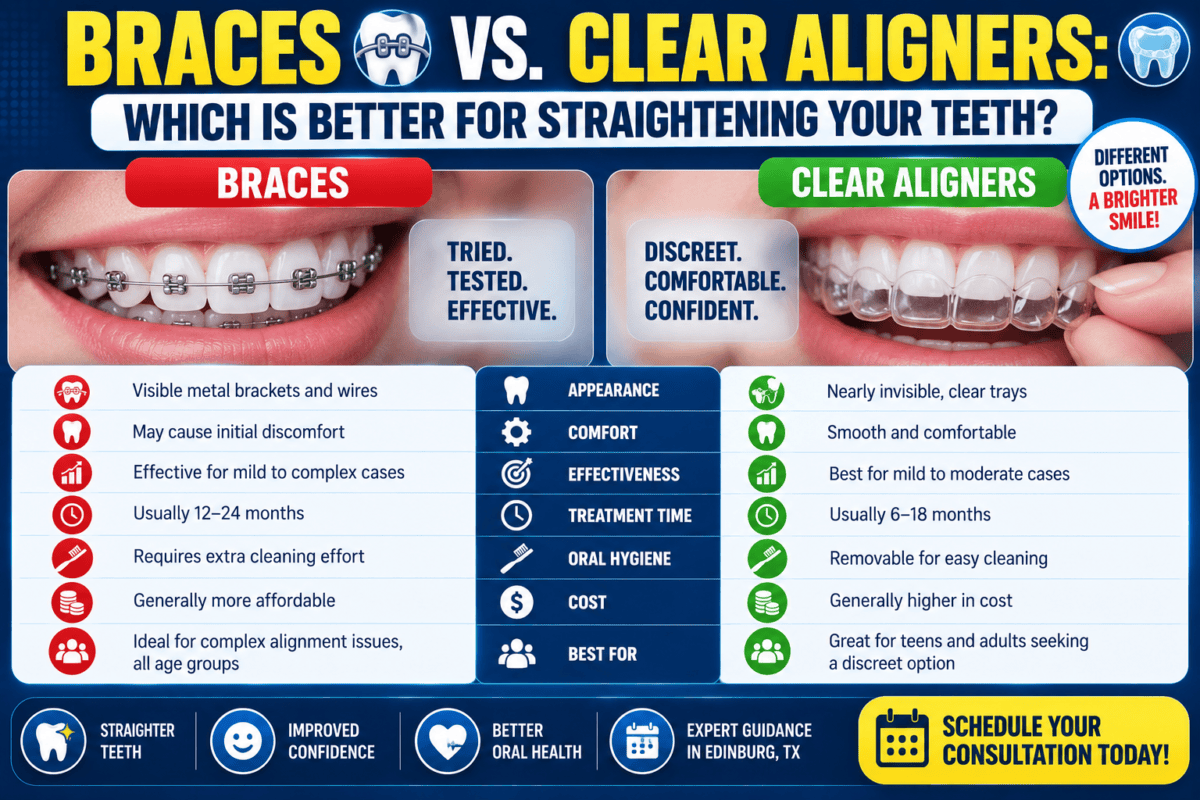
Braces vs. Clear Aligners: Quick Comparison
| Feature | Traditional Braces | Clear Aligners |
| Appearance | Highly visible | Nearly invisible |
| Removable | No | Yes |
| Food restrictions | More | Fewer |
| Brushing and flossing | More challenging | Generally easier |
| Daily compliance | Less dependent on patient | Highly dependent on patient |
| Comfort | May irritate cheeks/lips | Generally smooth and discreet |
| Social flexibility | Lower | Higher |
| Suitable for | Many orthodontic cases | Many mild-to-moderate alignment concerns |
| Requires consistent wear | No | Yes |
Are Clear Aligners Better Than Braces?
There is no universal winner.
Clear aligners may be the better choice if you value:
- A discreet appearance
- Removability
- Easier brushing and flossing
- Fewer food restrictions
- Flexibility around your lifestyle
- A less noticeable orthodontic treatment
Traditional braces may be more suitable if you:
- Need a fixed orthodontic appliance
- May struggle with consistent aligner wear
- Have a case that requires a treatment approach better suited to fixed appliances
- Prefer not to manage removable trays
The best option is the one that fits both your clinical needs and your ability to follow the treatment plan.
Who May Be a Good Candidate for Clear Aligners?
Clear aligners can be appealing to teenagers and adults who want to improve tooth alignment without wearing traditional metal braces.
They may be particularly attractive if you have:
- Mild to moderate crowding
- Gaps between teeth
- Certain bite concerns
- Crooked teeth
- Teeth that have shifted after previous orthodontic treatment
- A strong preference for discreet treatment
But candidacy should be determined through an individual dental assessment.
Your dentist needs to evaluate your teeth, gums, bite, and overall oral health before deciding whether aligners are appropriate.
Why a Dental Examination Matters Before Choosing
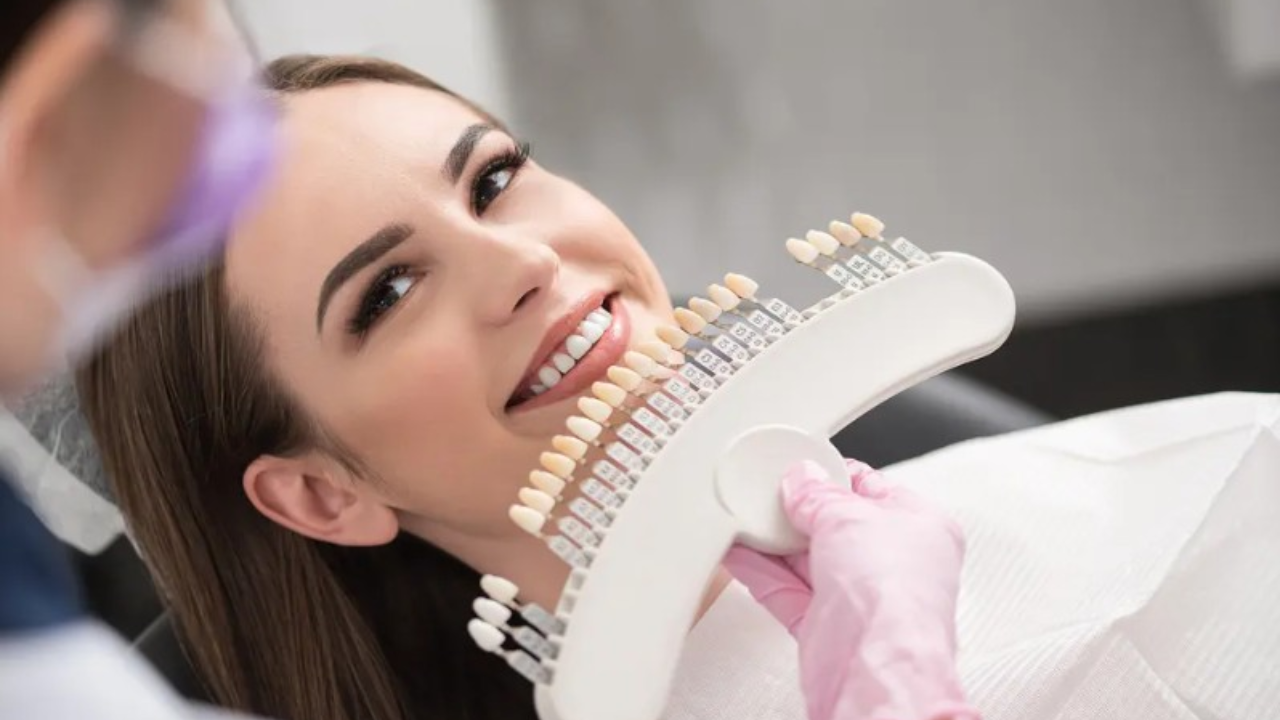
Choosing orthodontic treatment based solely on appearance can be misleading. Two people may both have crooked front teeth, yet the underlying causes can be completely different. A dental exam can help identify existing dental or oral health concerns and provide the information needed to develop an appropriate treatment plan. Ethos lists comprehensive dental examinations as part of its preventive and diagnostic services. The assessment can help determine whether the concern is primarily cosmetic alignment or whether there are additional issues involving the bite, tooth position, gums, or overall oral health. That makes the examination an important first step before committing to any teeth-straightening approach.
Are Clear Aligners Comfortable?
Clear aligners are designed to fit closely over the teeth, and their smooth surface can make them less noticeable during everyday activities. That does not mean treatment is completely sensation-free. When a new aligner is introduced, you may feel pressure or mild soreness as it begins guiding the teeth. This can be expected during tooth movement. The important distinction is between normal treatment pressure and significant or persistent pain. If something feels unusual or concerning, it should be discussed with your dental provider.
What About Grinding and Clenching?
Your bite and the forces placed on your teeth also matter when considering orthodontic treatment. Grinding and clenching can place excessive pressure on teeth and may contribute to tooth wear, jaw discomfort, and other complications. Ethos’s grinding and clenching guidance notes that misaligned teeth can be one factor associated with clenching and grinding, while uneven bite forces may contribute to jaw strain and tooth wear. If you regularly grind or clench your teeth, mention it during your dental or orthodontic assessment. It is useful information when evaluating your bite and planning treatment.
What Happens Before You Start Orthodontic Treatment?
Before choosing braces or clear aligners, your dentist needs to understand your teeth and bite.
The process may include:
Step 1: Examination
Your teeth, gums, bite, and overall oral health are assessed.
Step 2: Digital Scanning or Imaging
Depending on your situation, digital scans or other diagnostic tools may be used to understand tooth positioning.
Step 3: Treatment Planning
Your dentist evaluates whether clear aligners, braces, or another approach is appropriate.
Step 4: Discussion of Your Options
You should understand the expected treatment process, timeline, responsibilities, and costs before beginning.
Step 5: Treatment
Once a plan is established, your chosen orthodontic appliance is used to gradually move your teeth.
A consultation should therefore be about more than simply asking, “Which one looks better?”
It should answer the more important question:
Which treatment is appropriate for my teeth?
What Happens After Braces or Clear Aligners?
Finishing orthodontic treatment does not necessarily mean your teeth will remain perfectly positioned without maintenance.
Teeth can naturally shift over time.
That is why retainers are often an important part of the post-treatment phase.
Ethos’s current clear aligner process includes retainers after alignment is complete to help maintain the results.
Your dentist will advise you about the appropriate retainer schedule for your individual situation.
So, Which Is Better: Braces or Clear Aligners?
If you want a simple answer, it is this:
Clear aligners are often attractive for patients who prioritize discretion, removability, and lifestyle flexibility. Traditional braces remain an important option when fixed orthodontic treatment is more appropriate or when consistent removable-appliance wear may be difficult.
Neither treatment is automatically better for every patient.
The better choice is the one that can effectively address your orthodontic needs while fitting realistically into your daily life.
The Ethos dental services section currently lists clear aligners alongside dental exams, cleaning and whitening, crowns and veneers, root canal treatment, implants, and other dental services.
Frequently Asked Questions
Are clear aligners better than braces?
Not necessarily. Clear aligners offer advantages in appearance, removability, and convenience, while braces may be preferable for certain patients or more complex orthodontic needs.
Are clear aligners really invisible?
They are designed to be nearly invisible rather than completely invisible. Their transparent appearance makes them considerably less noticeable than traditional metal braces.
Can I eat normally with clear aligners?
Clear aligners should generally be removed before eating. This allows you to eat without the food restrictions associated with fixed braces while also helping protect and maintain the aligners.
How many hours a day should I wear clear aligners?
Ethos currently recommends approximately 20–22 hours of daily wear for its clear aligner treatment.
Are clear aligners painful?
You may experience mild pressure or temporary soreness, particularly when changing to a new set of aligners. Significant or persistent pain should be discussed with your dental provider.
Can teenagers use clear aligners?
Yes. Ethos states that its clear aligners may be suitable for teenagers and adults with mild to moderate orthodontic issues, provided they are appropriate candidates and can follow the required wear schedule.
Do I still need a retainer after clear aligners?
Retainers are an important part of maintaining orthodontic results because teeth can shift after active treatment. Ethos includes retainers as part of its clear aligner treatment process.
How do I know whether braces or clear aligners are right for me?
The best way is to have your teeth and bite assessed by a dental professional. Your treatment recommendation should be based on your specific alignment, oral health, treatment goals, and ability to follow the treatment plan.
The Best Choice Is the One That Fits Your Smile
Braces and clear aligners are not simply competing versions of the same treatment. They offer different experiences, responsibilities, and practical advantages.If appearance and flexibility matter most, clear aligners may be appealing. If you need a fixed appliance or may find removable trays difficult to manage, traditional braces may make more sense.
Ultimately, the decision should begin with your teeth not with which option happens to be more popular.A proper assessment can help determine what needs to move, how it should move, and which approach is most appropriate for achieving a healthy, well-aligned smile.