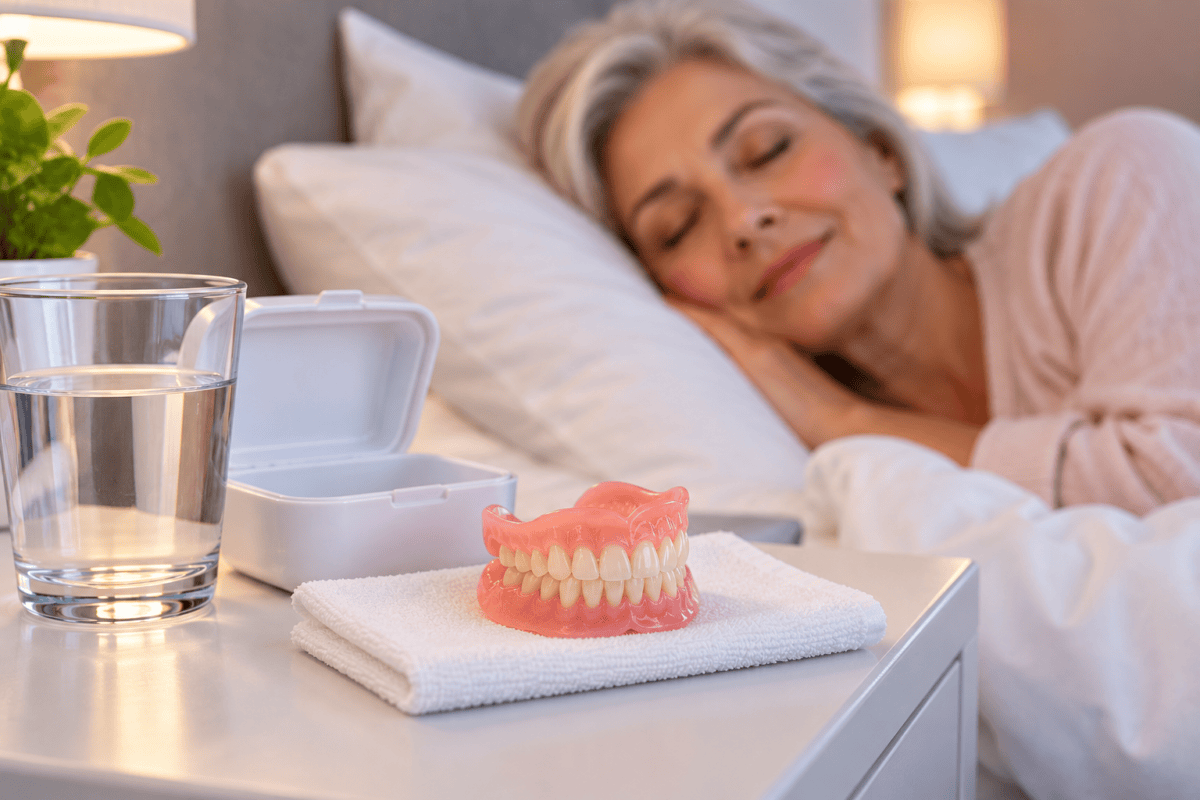
Wearing dentures can feel like a brand-new start — you can smile, chew, and talk with confidence again. But once bedtime rolls around, a common question comes up: should you sleep with your dentures in, or take them out? It’s one of the most asked questions among new and long-time denture wearers, and the answer might surprise you.
Here’s a clear, dentist-approved guide on whether you can sleep in dentures, what the risks are, and 10 simple tips to keep your mouth and dentures in top shape.
Can You Sleep With Dentures In?
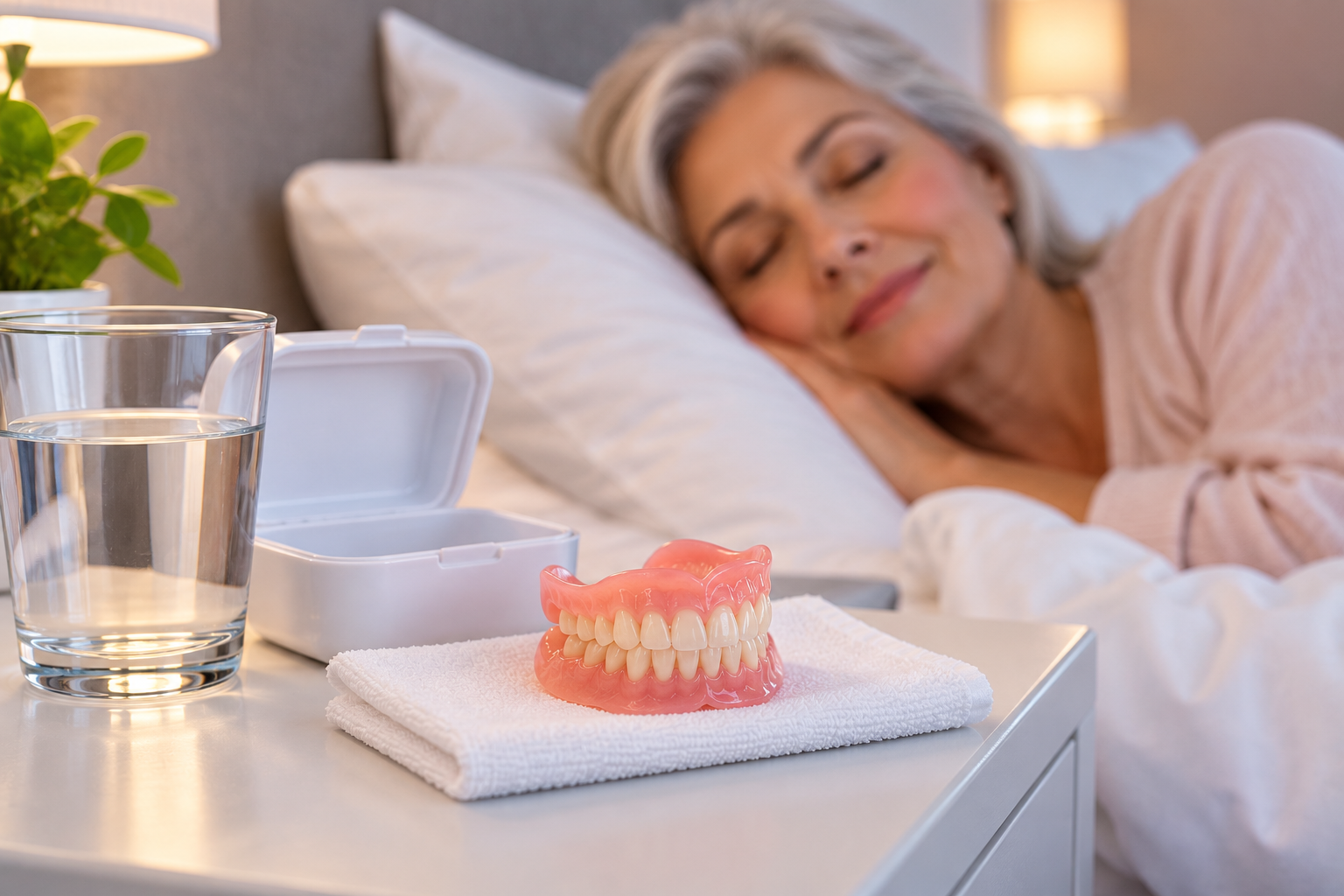
The short answer is — yes, you technically can, but dentists strongly recommend that you don’t. Sleeping with your dentures in night after night can lead to several health and hygiene issues over time.
While it may feel comfortable or convenient to keep them in, your mouth needs a break — just like your body does after a long day. Removing your dentures while you sleep gives your gums time to rest, heal, and stay healthy.
Why Dentists Say Don’t Sleep With Dentures In
Sleeping in dentures may seem harmless, but it can lead to a number of problems. Here’s why your dentist recommends taking them out at night.
1. It Increases the Risk of Gum Disease
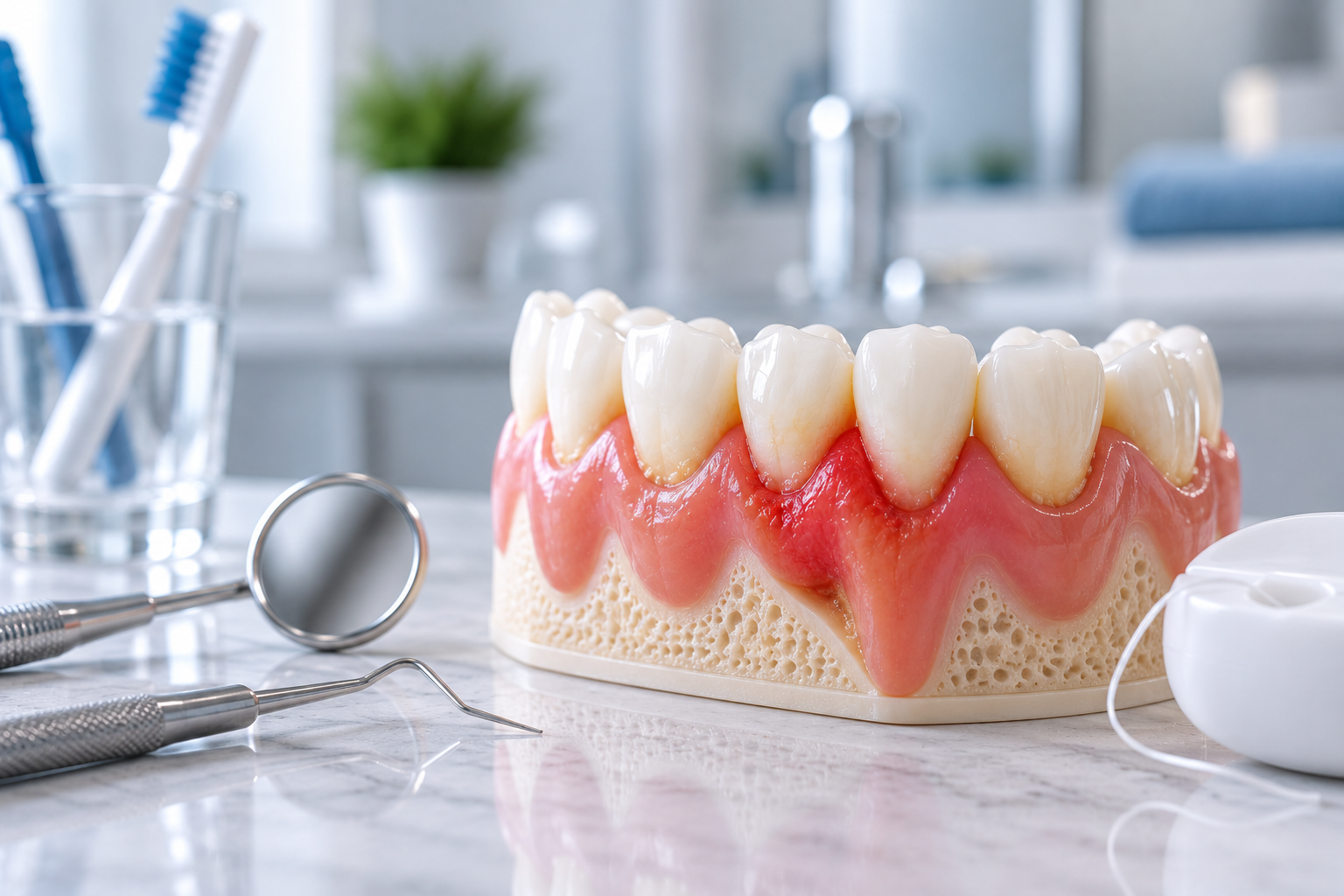
When dentures stay in your mouth 24/7, your gums don’t get the chance to breathe. This can lead to:
- Swollen and irritated gums
- Bacteria buildup under the dentures
- Higher risk of gum infection
- Bad breath
- Bleeding gums
2. It Can Cause Bone Loss
Your jawbone needs natural stimulation to stay strong. Wearing dentures all day and night puts constant pressure on the bone, which can lead to:
- Faster bone shrinkage
- Looser dentures over time
- Change in facial shape
- Difficulty wearing dentures comfortably
- More frequent denture adjustments or replacements
3. It Promotes Bacterial and Fungal Growth
A warm, moist mouth covered by dentures is the perfect environment for bacteria and yeast to grow. This can cause:
- Oral thrush (a white, painful infection)
- Bad breath
- Mouth sores
- Inflammation under the dentures
- Skin irritation around the lips
4. It Can Lead to Denture Stomatitis
This is one of the most common problems for people who sleep in their dentures. Signs include:
- Red, irritated areas on the roof of your mouth
- Soreness when wearing dentures
- A burning feeling in your mouth
- White patches on the tongue or palate
- Discomfort while eating
5. It Increases the Risk of Pneumonia
Studies have shown that older adults who sleep with their dentures in are more likely to develop pneumonia. This is because bacteria from the mouth can be inhaled into the lungs during sleep.
When It Might Be Okay to Sleep With Dentures In
There are a few short-term situations where keeping your dentures in overnight is acceptable. These include:
- The first 24 hours after getting new dentures (as instructed by your dentist)
- Traveling or sleeping over somewhere without proper denture care supplies
- Emotional comfort during the early days of adjustment
Even then, it’s only a short-term solution. Long-term overnight wear is not recommended.
10 Dentist-Recommended Tips for Sleeping Comfortably Without Dentures
Taking out your dentures at night doesn’t have to feel uncomfortable. With the right routine, you can sleep peacefully and wake up with a healthier smile. Here are 10 tips dentists recommend.
1. Remove Your Dentures Before Bed
Start a habit of taking out your dentures every night. This:
- Gives your gums a chance to recover
- Reduces the risk of infections
- Keeps your dentures in better shape
- Helps prevent bad breath
- Improves the lifespan of your dentures
Make it a regular part of your bedtime routine.
2. Clean Your Dentures Thoroughly
Before storing them, give your dentures a proper clean.
How to do it right:
- Rinse them under warm water (not hot)
- Use a soft denture brush, not a regular toothbrush
- Clean with a denture cleanser or mild soap
- Avoid toothpaste, which can be too abrasive
- Pay attention to grooves and clasps
Cleaning daily keeps your dentures fresh and stain-free.
3. Soak Dentures Overnight
Most dentures need to stay moist to keep their shape. Store them in:
- A glass of cool water
- A denture-cleansing solution
- A dentist-recommended soaking liquid
Never let your dentures dry out, as this can cause them to warp or crack.
4. Brush Your Gums, Tongue, and Palate
Even without natural teeth, your mouth still needs daily care. Use a soft toothbrush or a damp cloth to gently clean:
- Your gums
- Your tongue
- The roof of your mouth
- Your cheeks
This boosts circulation, removes bacteria, and improves breath.
5. Rinse Your Mouth Before Sleeping
A nightly rinse can help reduce bacteria and keep your mouth feeling clean. Try:
- Warm salt water
- A non-alcoholic mouthwash
- A dentist-recommended antimicrobial rinse
This is especially helpful if you have any sore spots or irritation.
6. Use a Denture Container
Keep your dentures safe overnight by using a proper denture container. This:
- Protects them from damage
- Prevents drying out
- Keeps them away from pets and curious children
- Makes them easier to clean
- Reduces the risk of accidentally losing them
Always rinse the container daily to prevent bacteria buildup.
7. Massage Your Gums
Gentle gum massage can help with comfort and circulation. Try this:
- Use a clean finger or soft cloth
- Massage in small, circular motions
- Spend 1 to 2 minutes per area
- Be gentle and relaxed
- Avoid pressing too hard
Many denture wearers find this soothing before bed.
8. Stay Hydrated
Drinking water throughout the day helps prevent dry mouth, which can worsen denture discomfort. Stay hydrated to:
- Keep saliva levels healthy
- Reduce gum irritation
- Maintain a fresh-tasting mouth
- Lower the risk of bad breath
- Support smoother denture wear during the day
Avoid sugary drinks and limit coffee or alcohol before bed.
9. Watch for Signs of Trouble
Pay attention to your mouth every day. See your dentist if you notice:
- Persistent soreness or redness
- White patches on your tongue or gums
- A burning feeling in your mouth
- Dentures that feel loose
- Difficulty chewing or speaking
Catching small issues early helps prevent bigger problems.
10. Visit Your Dentist Regularly
Even with dentures, regular dental visits are essential. Your dentist can:
- Check the fit of your dentures
- Adjust them as your mouth changes
- Look for early signs of infection or bone loss
- Provide professional cleanings
- Offer denture relining or replacements when needed
Most denture wearers should see their dentist at least once a year.
Tips for First-Time Denture Wearers at Night
If you’re new to dentures, the first few nights can feel strange. Don’t worry — it gets easier. Try these tips:
- Wear them for short periods at first
- Practice removing and inserting them daily
- Read or watch TV with them in to get used to the feel
- Drink water to ease dryness
- Speak out loud to build confidence with pronunciation
- Be patient — your mouth needs time to adjust
It typically takes a few weeks to feel completely comfortable.
Signs Your Dentures Might Need Adjusting
If you’re struggling with overnight removal, sometimes it’s because the dentures don’t fit quite right during the day. Visit your dentist if you experience:
- Dentures slipping while talking or eating
- Pressure spots or sore areas
- A change in your bite
- Difficulty chewing certain foods
- Dentures feeling loose suddenly
A small adjustment can make a big difference in comfort and confidence.
Frequently Asked Questions
Can I sleep with dentures in just sometimes?
It’s okay to keep them in for short-term situations, like traveling. But long-term nightly wear can harm your gums, bone, and overall mouth health.
How long should dentures soak overnight?
Most dentures should soak for at least 6 to 8 hours overnight to stay clean and keep their shape. Always use cool water or a denture-safe solution.
What happens if I accidentally fall asleep with my dentures in?
A single night of sleeping in your dentures isn’t dangerous. Just take them out, clean them well in the morning, and rinse your mouth thoroughly. Try not to make it a habit.
How do I keep my mouth from feeling dry when I take my dentures out?
Drinking enough water, using a humidifier in your bedroom, and rinsing your mouth before bed can help reduce dryness. If dry mouth continues, talk to your dentist about a saliva-replacement product.
How often should I replace my dentures?
On average, dentures last 5 to 10 years, depending on use and care. Regular dental visits help you know when it’s time for relining, adjustments, or a new set.
If you wear dentures or are thinking about getting them, the team at Ethos Modern Dental & Implant Center is here to help. Dr. Sreelakshmi Keesara provides expert, comfortable denture care that helps you sleep better, eat better, and smile with confidence every day.