Have you noticed your teeth looking longer than they used to? Or maybe you’ve spotted your gums pulling back, making your smile feel a little different? You might be dealing with receding gums. It’s one of the most common dental concerns adults face, and the good news is — it can be treated, slowed down, and even prevented with the right care.
Here’s a clear, dentist-approved guide to receding gums, the top 10 ways to fix and treat them, and simple prevention tips you can start today.
What Are Receding Gums?
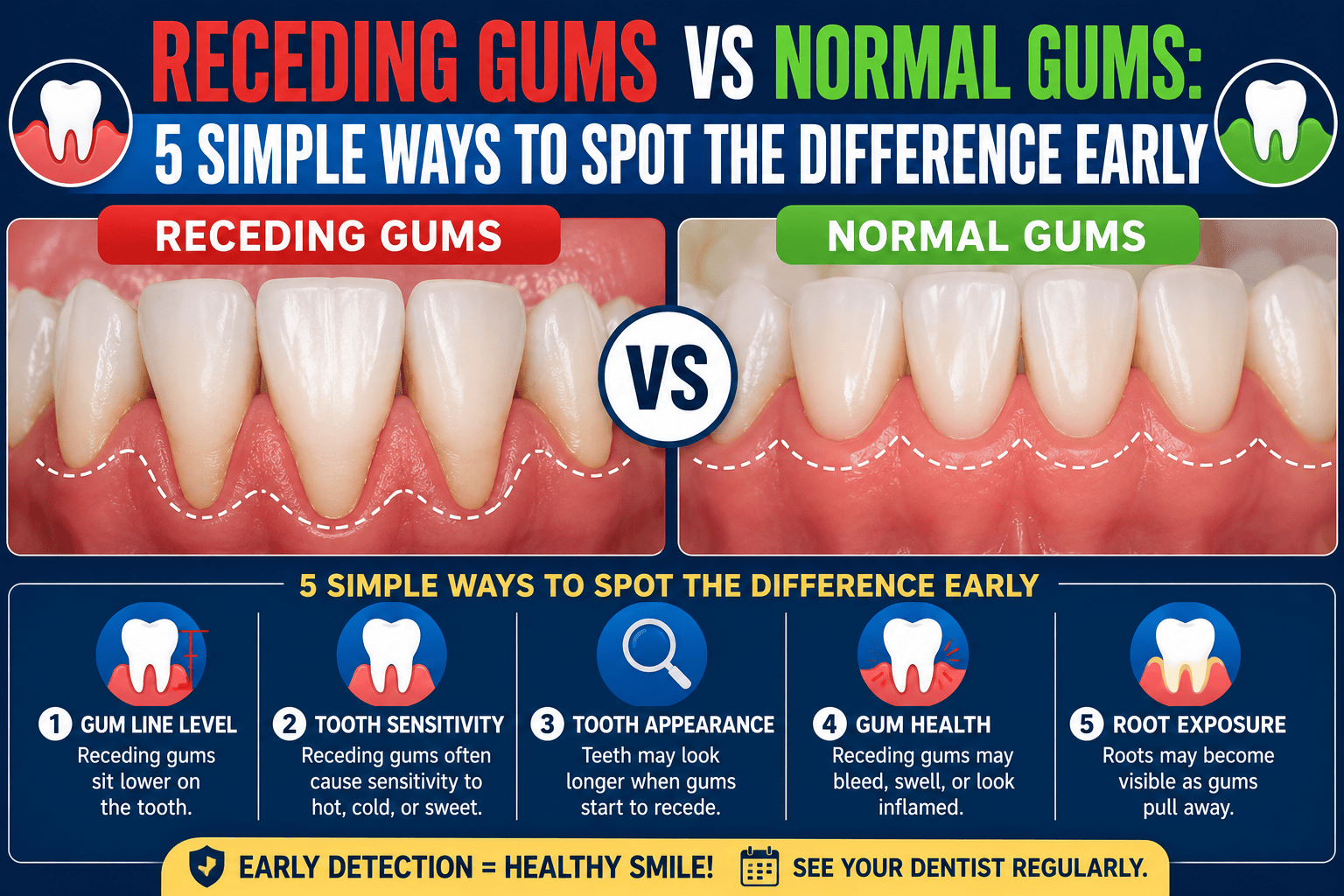
Receding gums, also called gum recession, happen when the gum tissue around your teeth slowly pulls back or wears away. This exposes more of your tooth — and sometimes even the root. Over time, this can lead to:
- Increased tooth sensitivity
- A longer-looking appearance of teeth
- Pockets forming between the gums and teeth
- Higher risk of cavities at the root
- Loose teeth in severe cases
- Tooth loss if not treated
The earlier you catch it, the easier it is to fix.
What Causes Receding Gums?
Receding gums can happen for many reasons. Sometimes it’s something you’re doing without realizing, and sometimes it’s part of natural aging. Some of the most common causes include:
- Brushing your teeth too hard
- Using a hard-bristled toothbrush
- Gum disease or infection
- Poor oral hygiene
- Smoking or tobacco use
- Genetics
- Hormonal changes
- Teeth grinding or clenching
- Crooked or misaligned teeth
- Aging
- Poorly fitting dentures
- Trauma or injury
Often, more than one of these factors plays a role.
Signs You Might Have Receding Gums
Many people don’t notice gum recession until it becomes more obvious. Watch out for these early signs:
- Teeth that look longer than before
- Sensitivity to hot, cold, or sweet foods
- Visible roots of your teeth
- Bleeding gums when brushing or flossing
- Gum line appearing uneven
- Tender or sore gums
- Bad breath
- A loose feeling in one or more teeth
If you notice any of these, it’s time to take action.
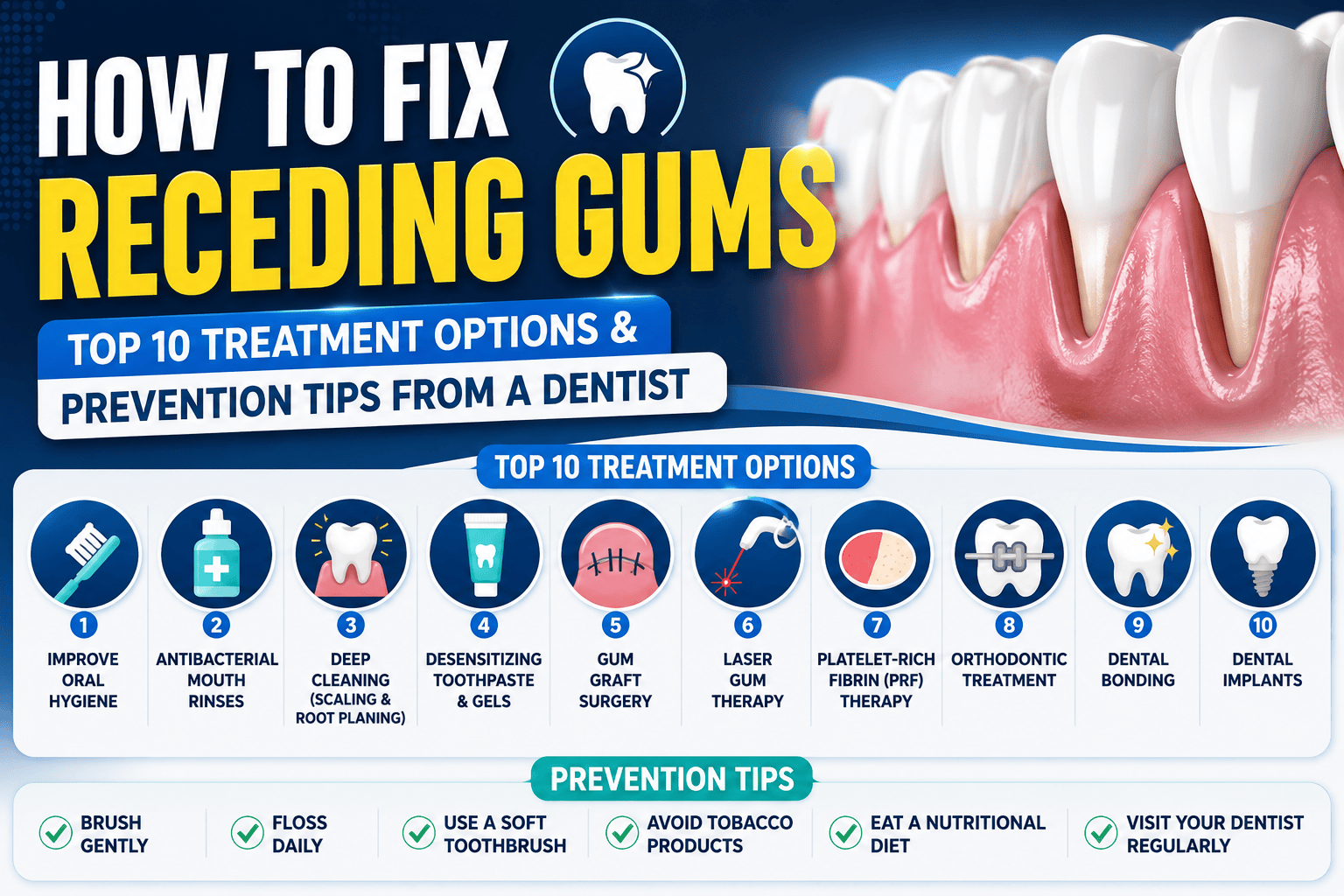
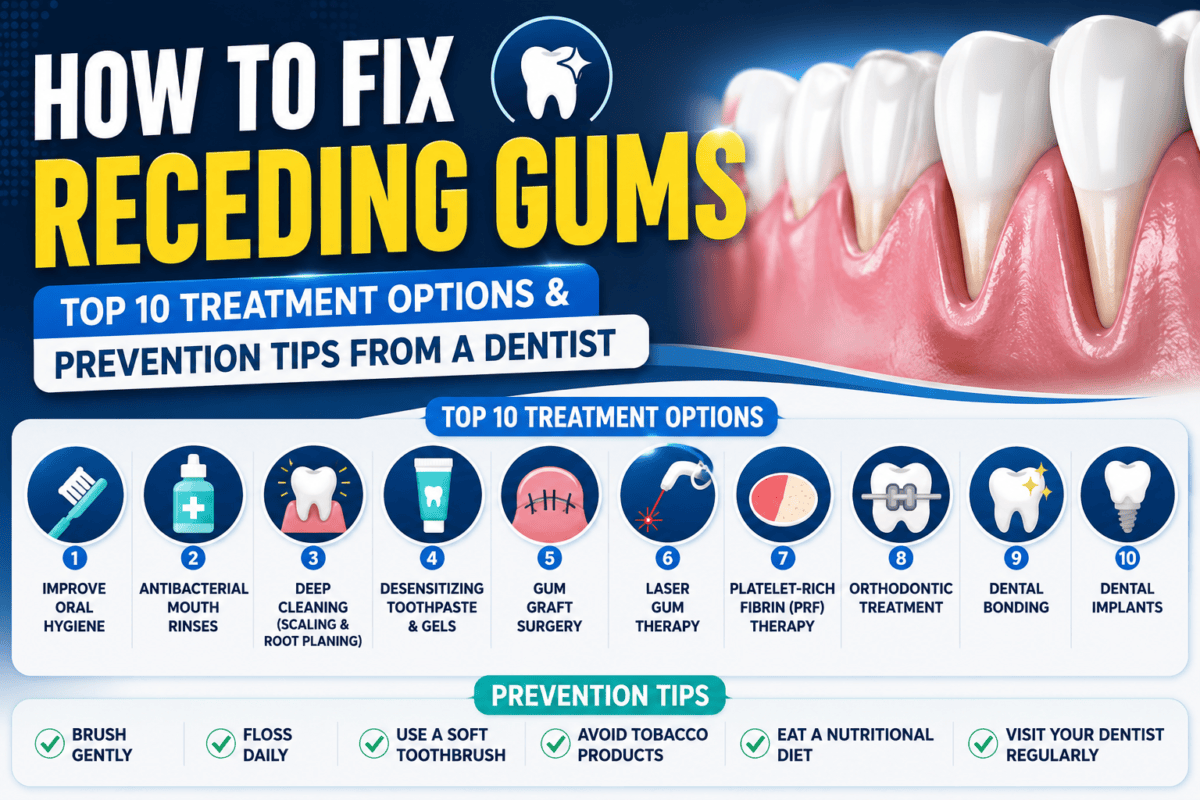
Top 10 Treatment Options for Receding Gums
The right treatment for you depends on how mild or advanced your gum recession is. Here are the most effective options dentists recommend.
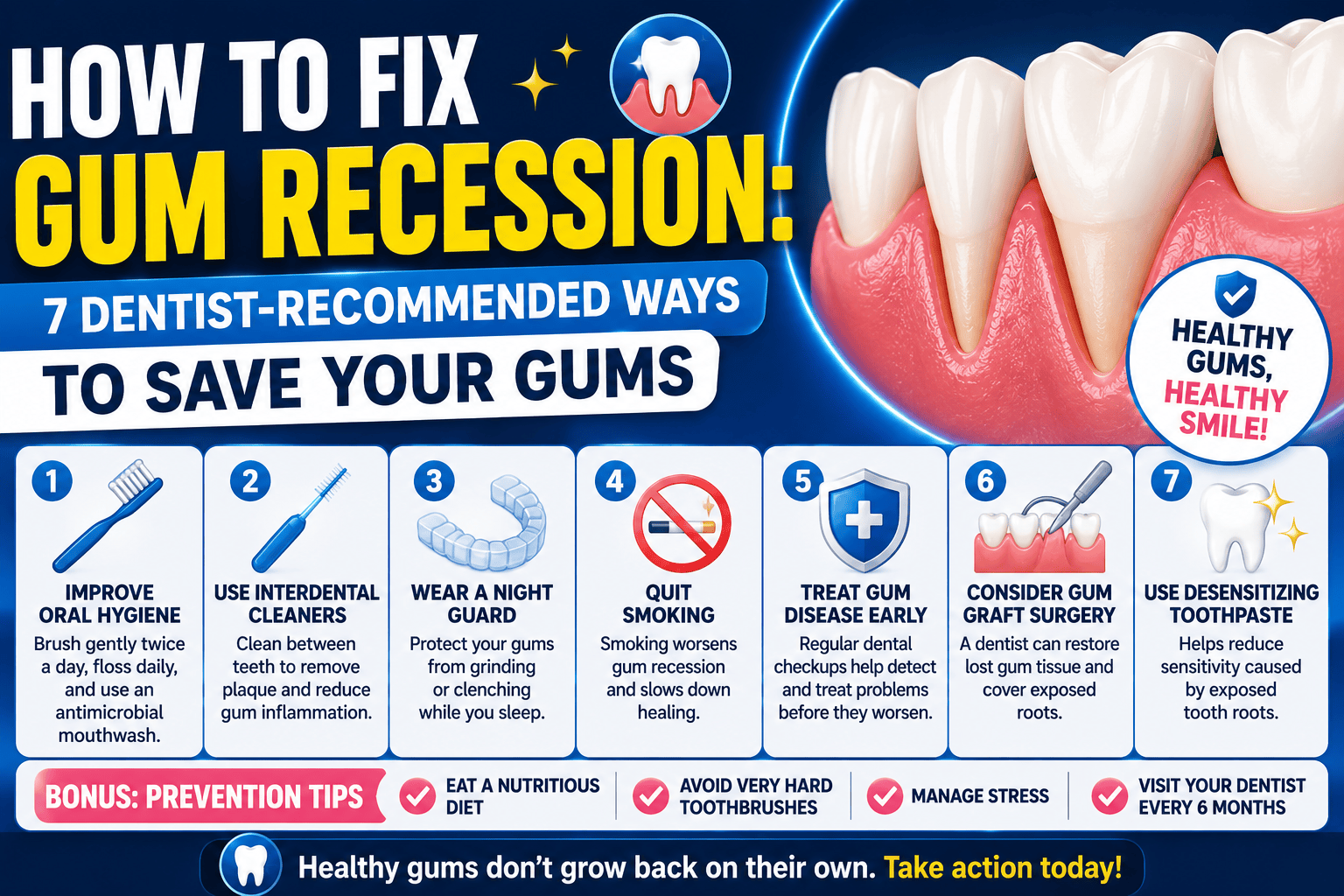
1. Deep Cleaning (Scaling and Root Planing)
This is often the first step in treating receding gums caused by gum disease. Your dentist will:
- Remove plaque and tartar above and below the gumline
- Smooth out rough surfaces on the roots
- Help your gums reattach to the teeth
- Reduce inflammation
- Stop further recession
It’s a deep, more thorough cleaning that helps your mouth heal.
2. Improved At-Home Oral Hygiene
Sometimes, gum recession can be slowed simply by adjusting how you care for your teeth. Tips include:
- Use a soft-bristled toothbrush
- Brush in gentle circles, not back-and-forth
- Avoid pressing too hard while brushing
- Floss daily and gently
- Switch to an electric toothbrush
- Use a fluoride or sensitive-teeth toothpaste
Consistent, gentle care can make a big difference over time.
3. Antimicrobial Mouth Rinses
Your dentist may recommend a prescription or over-the-counter mouthwash that:
- Reduces bacteria
- Calms inflammation
- Prevents further gum damage
- Promotes healing
- Helps fight bad breath
Use it daily as part of your routine for best results.
4. Night Guard for Teeth Grinding
If grinding is causing your gums to recede, a custom night guard can:
- Reduce pressure on your teeth and gums
- Protect enamel
- Improve jaw alignment
- Prevent further recession
- Ease morning soreness
It’s a simple solution with long-term benefits.
5. Orthodontic Treatment
Misaligned teeth can put uneven pressure on your gums and cause recession. Clear aligners or other orthodontic treatments can:
- Straighten teeth
- Improve bite alignment
- Reduce gum stress
- Allow gums to heal naturally
- Improve overall oral health
For mild to moderate cases, orthodontic care is a long-term fix.
6. Gum Grafting
For more advanced gum recession, your dentist may recommend a gum graft. This involves:
- Taking gum tissue from another area of your mouth
- Placing it where the gums have receded
- Helping the tissue grow back stronger
- Restoring a healthier gum line
- Protecting tooth roots
This procedure is one of the most effective solutions for visible gum loss.
7. Pinhole Surgical Technique (PST)
This is a newer, less invasive option for gum recession. With this method, your dentist:
- Makes a small pinhole in the gum
- Gently repositions the existing tissue
- Covers exposed tooth roots
- Avoids stitches or cutting
- Shortens recovery time
Many patients prefer this option because it offers great results with less downtime.
8. Tissue Regeneration Procedures
If the bone supporting your teeth has been damaged, your dentist may use:
- Membranes
- Growth proteins
- Tissue-stimulating gels
These help regenerate lost tissue and bone, giving your gums a stronger foundation.
9. Composite Bonding or Pink Veneers
If you’ve experienced cosmetic concerns from gum recession, your dentist might recommend:
- Tooth-colored bonding to cover exposed roots
- Pink composite material to recreate the gum line
- Veneers designed to mask recession
These options improve the appearance of your smile while protecting your teeth.
10. Treating Underlying Gum Disease
If gum disease is the cause, treating it directly is essential. Treatment may include:
- Regular cleanings
- Periodontal therapy
- Antibiotic treatments
- Lifestyle changes
- Frequent dental checkups
Treating the root cause helps stop further damage and supports long-term gum health.
How to Prevent Receding Gums
The good news is that gum recession is often preventable. With a few simple changes, you can keep your gums healthy for life.
1. Brush Gently and Properly
A common cause of recession is brushing too hard. Try these tips:
- Use a soft-bristled brush
- Apply light pressure
- Brush for 2 minutes twice a day
- Use small, circular motions
- Replace your toothbrush every 3 months
Brushing harder doesn’t mean cleaner teeth. Gentle is best.
2. Floss Every Day
Daily flossing helps remove plaque between teeth where toothbrushes can’t reach. This:
- Keeps gums healthy
- Reduces inflammation
- Prevents bacteria buildup
- Improves overall oral hygiene
- Supports long-term gum strength
Be gentle when flossing, especially around sensitive spots.
3. Visit Your Dentist Regularly
Routine dental visits help catch gum recession early. Most adults should:
- Schedule a cleaning every 6 months
- Have annual full check-ups
- Get X-rays as recommended
- Ask about any sensitivity or changes
- Discuss your brushing habits
Early detection is the easiest way to prevent serious recession.
4. Avoid Tobacco Products
Smoking and chewing tobacco are major contributors to gum disease and recession. Quitting can:
- Improve gum health
- Reduce bad breath
- Lower the risk of tooth loss
- Improve healing
- Boost overall health
It’s one of the best gifts you can give your smile.
5. Manage Stress
High stress can lead to teeth grinding and clenching, which damages gums. Try:
- Deep breathing
- Meditation
- Exercise
- Better sleep
- A custom night guard if needed
A calm mind supports a healthy mouth.
6. Eat a Balanced Diet
Your gums need nutrients to stay healthy. Foods that support gum health include:
- Leafy greens
- Citrus fruits (in moderation)
- Dairy products
- Whole grains
- Nuts and seeds
- Plenty of water
Avoid too much sugar and processed foods, which feed harmful bacteria.
7. Watch for Early Warning Signs
If you notice symptoms like sensitivity, bleeding gums, or visible gum changes, don’t wait. Seeing your dentist early can save you from more advanced treatment later.
When to See a Dentist About Receding Gums
You should book a dental visit if you notice:
- Teeth that look longer than usual
- Bleeding when brushing or flossing
- Sensitivity in certain teeth
- Visible gum changes
- Pain near the gumline
- A loose or shifting tooth
- Persistent bad breath
- Pockets between gums and teeth
These can all be signs that your gums need professional attention.
Frequently Asked Questions
Can receding gums grow back?
No, gum tissue doesn’t grow back on its own. However, treatments like gum grafting and the Pinhole Surgical Technique can restore lost gum tissue and improve gum health.
Are receding gums always a sign of gum disease?
Not always. Gum recession can also be caused by aggressive brushing, genetics, grinding, or misaligned teeth. However, gum disease is one of the most common causes, so always get it checked.
Is gum recession painful?
It can be. Many people experience tooth sensitivity, soreness, and discomfort when eating or brushing. Treatment can help reduce pain and prevent further issues.
How long does it take to treat receding gums?
It depends on the severity. Mild cases can improve in weeks with better habits, while advanced cases may need surgical procedures that take several months to fully heal.
Can children get receding gums?
Yes, although it’s less common. Causes in children include aggressive brushing, gum disease, or misaligned teeth. Regular dental visits can catch and treat the issue early.
If you’re noticing the signs of receding gums or want to keep your smile healthy for life, the team at Ethos Modern Dental & Implant Center is here to help. Dr. Sreelakshmi Keesara offers gentle, personalized care to treat gum recession and protect your beautiful smile for years to come.